
How AI will impact retail in 2026 and beyond
Artificial intelligence (AI) isn’t just a buzzword anymore — it’s a catalyst transforming workplaces around the world. Nowhere is this more evident than in the retail sector, where advances in automation, intelligent systems, and data-driven tools are changing how people work, what skills they need, and even how customers shop.
MULTICHANNELRETAILCUSTOMER CENTRICDIGITAL TRANSFORMATIONDIGITAL COMMERCEDIGITAL LEADERSHIP
David Worby
12/16/20253 min read
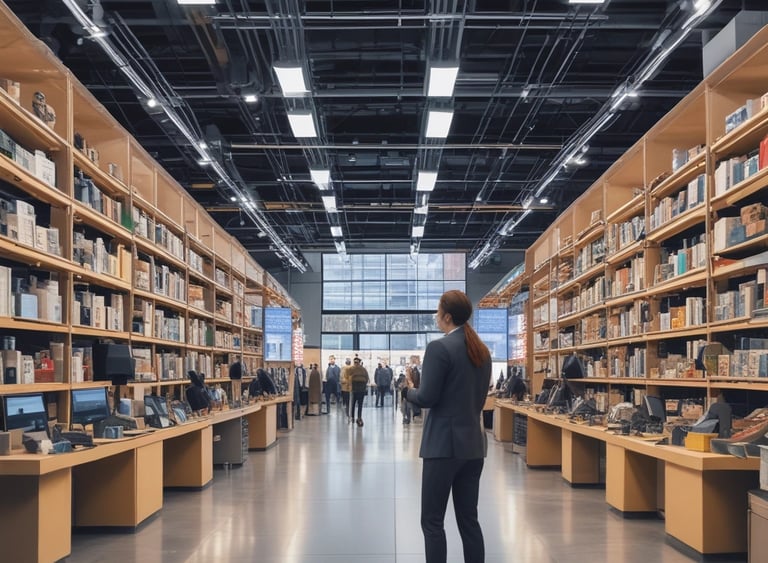

Artificial intelligence (AI) isn’t just a buzzword anymore — it’s a catalyst transforming workplaces around the world. Nowhere is this more evident than in the retail sector, where advances in automation, intelligent systems, and data-driven tools are changing how people work, what skills they need, and even how customers shop.
By 2035, AI could automate or augment nearly three-fifths of retail tasks
Recent headlines show the pace and scale of change. From mass layoffs linked to automation to ambitious investments in AI capabilities, the future of retail work is being reshaped in real time. Let’s explore the major trends and what they mean for jobs on the shop floor and behind the scenes.
🧠 1. Retailers Are Betting Big on AI — and That’s Changing Workflows
According to new industry surveys, over 80% of retailers plan to increase their use of AI and automation in 2026 — investing in tools that improve efficiency, customer experience, and operational insights. These technologies range from automated customer service systems to AI-powered inventory and supply chain tools. Honeywell
A major UK study predicts that by 2035, AI could automate or augment nearly three-fifths of retail tasks, especially routine and data-driven ones like stock management, returns processing, and online content creation. Retail Gazette
📌 What this means: Retailers are increasingly relying on technology not just to help workers but to take over parts of their work altogether. This is reshaping the nature and distribution of retail jobs.
🤖 2. Automation Isn’t Just in Warehouses — It’s on the Shop Floor Too
AI isn’t confined to back-end software. Retailers are rolling out systems that directly change customer interactions:
Self-checkout and AI-enhanced checkout systems are rolling out in grocery chains, reducing the need for traditional cashier roles. The Sun
Automated shelf-scanning cameras and robots are helping with inventory checks and replenishment — tasks once done by staff. Retail Rewired
This trend mirrors broader IS job losses linked to AI adoption reported across multiple sectors in 2025, including notable layoffs at major employers. While not all retail cuts are directly AI-related, automation has been cited by companies as a key factor reducing headcount. Business Insider+1
📉 3. Some Jobs Are at Risk — But Displacement Isn’t the Full Story
Many routine, repetitive retail jobs — like cashiers and stock clerks — are most vulnerable to automation because AI and robots can perform these tasks at lower cost and often with greater consistency. This is reflected in multiple expert reports and workforce studies. Nucamp
Yet the picture isn’t purely one of loss. Retail leaders often emphasise that AI can enable employees to focus on higher-value tasks — for example, customer engagement, sales strategy, and problem solving — and that technology may improve retention and job satisfaction if implemented thoughtfully. Honeywell
🎯 4. New Roles and Skills Are Emerging
AI doesn’t just eliminate work; it also creates demand for new skills and roles:
AI-assisted hiring tools are speeding up recruitment and helping match candidates to jobs more effectively, reshaping how HR functions in retail. ETRetail.com
Roles that focus on data interpretation, customer experience design, and AI oversight are becoming more important as retailers deploy these systems.
Business leaders outside retail — such as JPMorgan Chase CEO Jamie Dimon — have even highlighted that skills like critical thinking, communication, and adaptability will matter more than ever in an AI-shaped economy. The Times of India
⚖️ 5. Challenges and Broader Impacts
While AI presents opportunities, there are significant challenges for workers and policy makers:
Skill gaps — Retailers are investing heavily in AI, but many employees lack training in data-driven or tech-focused roles. Retail Gazette
Equity concerns — Automation could disproportionately impact entry-level jobs that have traditionally provided opportunities for young or less experienced workers.
Balancing efficiency with human touch — Retailers must decide how to combine AI tools with the uniquely human aspects of customer service that technology can’t easily replicate.
And globally, the broader discussion about AI’s effect on jobs — including concerns about widespread displacement and purpose in work — continues to make headlines. Business Insider
🛍️ Looking Ahead: A Hybrid Future of Work
AI is not an on/off switch. Instead, what we are seeing in retail is a hybrid future where humans and machines work together:
Machines automate repetitive and data-intensive tasks.
Humans focus on creativity, empathy, complex decisions, and building relationships with customers.
New job categories emerge alongside AI oversight, analysis, and strategy roles.
For retail workers and job seekers, the message is clear:
Adaptability and continuous learning will be essential. Retail jobs are evolving — those who can combine technical understanding with uniquely human strengths will be best positioned to thrive.
Read Also:
Digital Perspectives - Read Here
Digital Maturity Perspectives - Read Here
The Multichannel Podcast All Episodes - Click here
The Future of Work in Retail: How AI will Reshape Jobs in 2026 and Beyond
© prosperocommerce 2025